Counting dollars

Ever travelled to a foreign country and found yourself converting the local currency to your own? And have you ever had this face when you realised how much everything costs in your own money?

What the hell?!
What the hell?!

It’s the bitter reality for most of us. Although you tell yourself you’re on holiday and it’s ok to splurge once a while, you still can’t fathom the marvel that is currency conversion. But your inner mind is rightโ€”it is only once a while, and you should splurge on yourself.

Can’t say the same about me, however. One of the scariest things about moving to Australiaโ€”a country well known for its venomous snakes and its well-established economyโ€”is that everything is so damn expensive. And the locals often don’t realise it because, well, they earn well.

The average earning capacity for an Australian is high enough for an average Australian lifestyle.

For me, though, it seemed bollocks. I had fair warning, yes. Expat forums and online resources informed me page after page how pricey life is. But I didn’t understand the real weight of it until I saw that a simple fruit-and-nut bar costs 4 to 5 dollars. A decent meal at a so-so restaurant will cost at least $15โ€”not including drinks. It’s not uncommon to spend $25 on a meal.

What’s funny though, is that I found a good, sturdy pair of shoes for the same price. It wasn’t Nike or Sketchers or any if those high-profile brands, but it was a functional pair of shoes.

And I see that across all productsโ€”the pricing structure is so illogical. Coles and Woolworths are two of the largest supermarket brands in Australia. Both have their own branded products for almost everything (like Trader Joe’s). Salt, pepper, detergent, prepackaged meals, chocolate, biscuits, chocolate biscuitsโ€”you name it, and chances are they’ll have it. They’re super cheap tooโ€”a 2-litre bottle of laundry liquid cost me less than $2. But unlike Trader Joe’s, these supermarkets also carry other local and imported brands which are four to six times expensive. Just for comparison, other detergents range between $7 to $10. And people still buy them.

Most people I’ve seen use a clever combinationโ€”they buy home brands for a lot of stuff, but they also spend extra on some other fancier brands. It all depends on the product. I’m still trying to discern how they reason it out, but after spending weeks comparing prices between brands and also between supermarkets, I’ve also started making some calculated purchasing choices.

The most important thing to know, if you’re visiting Australia, is that how items are priced makes no sense whatsoever. Whether you’re travelling from the US, Asia, or Europe, don’t expect logic. Come, explore, have fun and splurge. Don’t try and make sense of the Aussie way because you’ll only depress yourself by doing so. I speak from experience.

Laundry day

Moving to a new country isn’t just about striding through supermarket aisles making fun of all the types of tomatoes you can buy. And neither is it about exploring the city as a tourist.

Moving to a new country means you have to start doing regular chores as well. And today was the first time I did laundry by myself.

Of course not. It’s not the first time I ever did laundryโ€”I’ve done it plenty of times back in India. I used to hand wash my clothes for a long time before we got a fancy washing machine. I’ve run it loads of times since, and know my way around it well enough.

For my first few weeks in Australia, I bunked with my brother whose washing machine I got accustomed to without any trouble.

However, I hadn’t done my laundry at all since moving into a place of my own. It wasn’t any different than doing laundry at my brother’s homeโ€”except it was. Unlike my brother’s place, my new place doesn’t have a clothesline or a balcony to dry wet clothes. Instead, we have a dryer.

Ah, a dryer. A concept I’d only heard of in movies where winter was a real thing. Back in Chennai where temperatures never fall below 25 degrees Celsius (77 degrees Fahrenheit), it seemed insane to have a dryer. Plus, it’s expensive and a luxury item. I didn’t worry much about it, thoughโ€”my roommate walked me through the procedure, and it seemed simple: throw the clothes in and turn the knob. Easy. Great.

So there I was a week after moving in, with a load of dirty clothes that could no longer escape the wash. But first, I needed detergent. Not unlike the tomatoes, there were hundreds of brands and typesโ€”of powders, liquids, concentrated liquids, conditioners, and bleach. After struggling for about 15 minutes, I grabbed the cheapest liquid detergent and got the hell out of the supermarket.

I’d seen my brother dump a spoon-full of detergent powder onto his clothes. My roommate, who used liquid, affirmed the procedure. However, the label on the laundry liquid I got warned against pouring it onto the clothes. Helpful, you might think. But noโ€”it didn’t tell me how else to use it. So on the morning of my laundry day, I spent about 20 minutes online trying to figure out to use the liquid on a washing machineโ€”and hear thisโ€”that didn’t have a detergent dispenser. I’d never imagined a washing machine without a detergent dispenser, but here we are. It turns out I have to dilute a small portion of the liquid in warm or hot water and then pour it on the clothes. Fine. But even now, I don’t understand the difference between the regular liquid that I got and the concentrated liquid I was sure to avoid.

By the time I turned on the washing machine, I felt drained of mental energy. But it was just the beginning. Worried that I’d made a mistake (I hadn’t), I was too afraid to leave it running and return to my room. So for the next hour, I stood close by alternating between working and checking in on the machine. Despite my preparedness to pull the plug if something went wrong, the machine worked fine. My clothes came out clean and intactโ€”although I wish my socks had had a better run. Heaving a huge sigh, I wondered if there was a way to avoid using the dryer. But to my tough luck, it was a cloudy, rain-forecasted day. The sun didn’t even show its face all afternoon.

Oh, well. I shoved my clothes in the dryer and turned on the knob. There were only two settingsโ€”light blue for synthetics or delicates and dark blue for regular. I ran the dryer under the highest heat for delicates. Unsure of how long it should go, about 15 minutes in, I stopped and felt my clothes. They were still wet, so I let it go again. Then I realised that the dryer was making a big racketโ€”nothing faulty, but it was so loud that I panicked. So I stopped after another 10 minutes. My clothes were wet. I ran the dryer yet again, and again, stopping every 10-15 minutes. What if I ran it for too long? What if it overheated and went kaput?

It was a tense afternoon. I was shuffling back and forth between the dryer and my laptop. I got no work done, however at the end of it all, I had a bunch of clean and warm clothes. And I didn’t flood the apartmentโ€”which is always a good thing.

People say moving to a new country is a major life change like work, family, and friends, but I don’t think they realise that it’s the small everyday things that pose the biggest challenge. Geezโ€”it was easier to get on the bus to the Botanical Gardens than it was figuring out the functionality of a washing machine that didn’t have a detergent dispenser.

The National Botanical Gardens of Australia

I’ve been to quite a few botanical gardens in the past, and it was with that arrogance that I went into the Australian National Botanical Gardens. After all, it’s just a garden, I thought. What could be new?

Australian National Botanical Gardens - gift shop
Australian National Botanical Gardens – gift shop

It turns out that the Australian Botanical Gardens pay more attention to aspects of Australian geography and heritage. As I walked into the gardens, I first passed the gift shop, whichโ€”like any other gift shopโ€”carried extensive and expensive trinkets for the tourist soul. Even though I didn’t purchase anything, I spend a good 15 minutes walking around, admiring local handicrafts. I had no idea how much the indigenous people’s artwork and culture permeated the Australian lifestyle. Despite battling discriminatory issues, Australia as a country makes conscious effort to recognise and even promote its indigenous roots.

After shuffling through coasters, notebooks, and bookmarks engraved with local birds and wildlife, I was ready to see the actual gardens.

National Botanical Gardens

Unlike the other gardens I visited, the Australian National Botanical Gardens appeared smaller by area. Looking at the map, I realised there’s a single main trail that went through the whole gardenโ€”ideal for people who just wanted to walk. For the others, the plant seekers, plenty of subordinate trails led from and across the main path. It was great because I could follow any trail to the smaller lawns and picnic areas, and still get on the main trail to continue through the garden. Here and there, leading from the main path were smaller and more concentrated enclosuresโ€”like the rock garden, the rainforest gully, the eucalyptus lawn, and the red centre garden.

Each of these gardens had one common aspect. The rainforest gully, for instance, showcases plants and creepers from Tasmania, the coldest and greenest state of the country. Even as I walked through the plants that spread their branches over my head, I could feel the temperates falling and the chilly breeze kissing my cheeks.

When I stopped at the rock garden, looking around trying to find my way back onto the trail, I got lost amidst rocky plants. Weird enough, however, despite seeing nothing but identical rocks, I felt a serene calmness overcome me. I was lost, but happy about it too. My heart skipped with joy looking at the odd plants that clung to the rocksโ€”their life depends on them. Humans are the same. Even though we don’t realise or acknowledge it, we hold on to nature because our lives so depend on their survival.

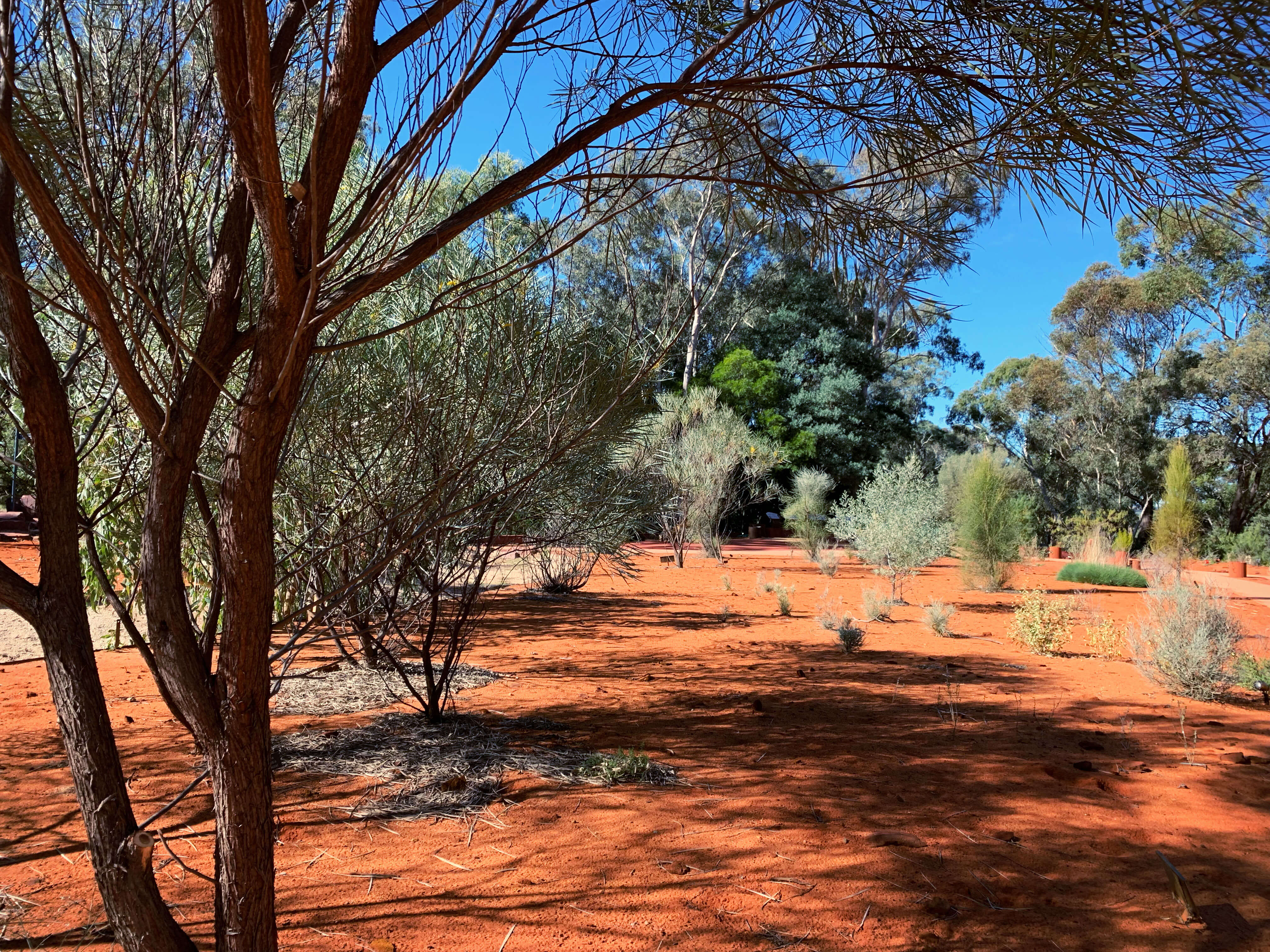
That thought became even more profound when I arrived at the red centre garden. A massive landscape spread in front of me, its red sand, dry plants, and searing radiance almost blinding my eyes. It wasn’t a hot dayโ€”it was the ideal temperature for a day out. However, the moment I saw those desert plants and their habitat, I saw a tiny sample of the real heat that the Outback gets throughout the year. Everywhere I turned redness stared back, reflecting the emptiness of the landscape. To my surprise, though, the garden also featured a massive structure of a lizard native to the deserts. Here and there were also busts of smaller animals that call the desert home. Walking around the garden, I realised that even a lot of Australian children don’t see or experience the Outbackโ€”which makes up for almost one-fifth of the entire country.

As I headed back to the main trail, I couldn’t help but wonder at the marvel that is Australia. In a single garden, I managed to observe the various temperatures, plant life, and lifestyles that this country contains. I enjoyed the afternoon exploring the gardens. And each moment will remain in my mind just as pleasant as the herbs and eucalyptus plants, just as incredible as the rancid cacti, and just as beautiful as the chilling rainforests.

Different is courage

Australian National Botanical Gardens in Canberra

Fear less though alone

it’s the odd ones that stand out

a lesson from plants


Photo: Australian National Botanical Gardens in Canberra, ACT

Reflecting

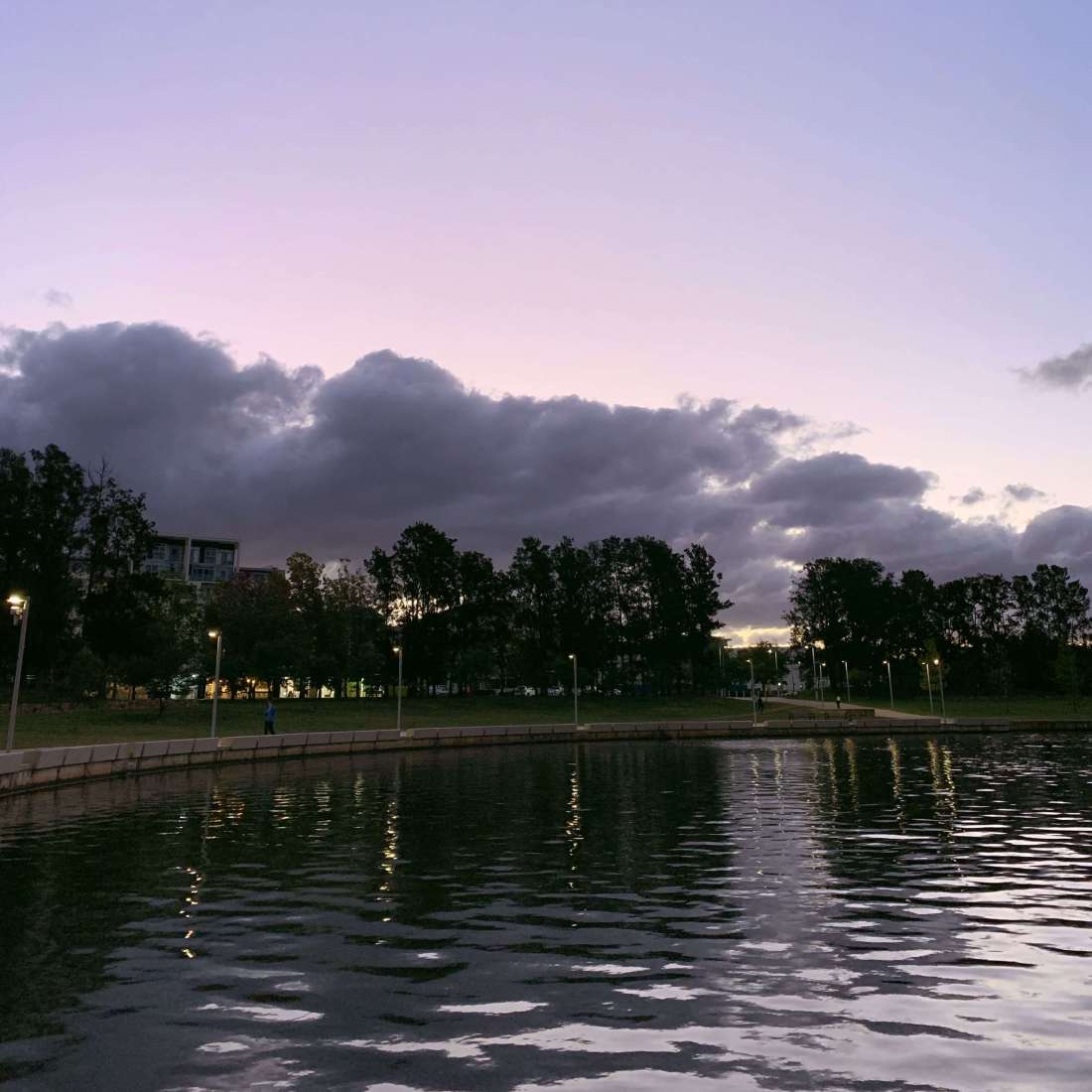
Lake Ginninderra in Canberra, Australia

Bathed in reflections

and deep wonder, lies the lake

and beside it, I


Photo: Lake Ginninderra in Canberra, Australia