Let’s Talk Education

Or to be more exact, let’s talk studies and literature.

Some say those two words should never be in the same sentence. And if that’s the case, my whole life is a question mark. Because I study literature. But I don’t have a degree in English literature. I don’t see the point of it.

Too much of conflict in one paragraph?

I’m a literature enthusiast, but I don’t have a paper from a university to certify my interest. I study literature by studying the literature itself. Not the textbooks that other people (who think they have conquered the subject) wrote. Because when it comes to the written word, there’s no one way to understand it. There’s no right or wrong in interpretation.

Our system of education, however, forces students to read, understand, and memorise other people’s ideas. This may seem sensible for science or mathematics. Because those subjects rely on facts, and facts are facts no matter who writes them where.

But literature has more do with individuals. I don’t see the world the same way my mother sees it — even though she showed me the world. When no two people comprehend the same scene in the same way, how sensible is it to thrust one person’s perspective on a larger crowd?

But I love studying literature.

The best think about literature is that the student makes the decision. If you think it’s right, it is. If you think Shakespeare predicted British colonisation in his Tempest, then so be it. You are entitled to your opinion. The literature never tells you what to think. But a degree in literature not only tells you what to think, it also forces you to agree with textbook writers.

And that’s why I see no point in a degree in literature.


Cross-posting from my Medium blog.
Advice for the Modern Age

hamlet

Body shaming is a thing now. Having experienced it a few times myself, I can say it’s not new. For a long time now, the world has been mocking those who don’t have pear-shaped bodies.

One man has the best advice for those who shame other people. He lived well ahead of his time, hinging on the period he was born into, yet thriving even four hundred years later.

And how does he give us a his piece of mind? He shames his lover for a start.

“If hairs be wires, then black hairs grow on her head.”

That was, of course, in a time when blond curls ruled the day and any woman with straight hair was un-ladylike. Things have changed since, I know. Nowadays, people pay fortunes just to get their curly hair straightened. Nevertheless, body shaming hasn’t changed at all.

And then there’s this image of rosy cheeks and powder puff.

When I face my mirror, I know I have no rosy cheeks. There’s no chubbiness that every man’s supposed to like, there’s no colour, or flush, or blush. When I see myself in the mirror, I only see what shamers told me: A dull face, and cheeks too thin to be beautiful.

Shakespeare said it too:

“But no such roses see I in her cheeks.”

But here’s the question. Why would anyone expect a woman to look more like the sun and less like a woman? Why would anyone want a woman who resembles a child’s doll, when she’s stronger than that in real life?

Again, Shakespeare has the answer. And his answer — four centuries old though it is — is unmatched even in this age.

“And yet, by heaven, I think my love as rare

As any she belied with false compare.”

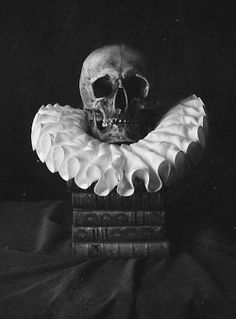
To be or not to be a body shamer. That’s not the question anymore. No matter how much we compare a person, woman or man, to an image of perfection, it would be just that — an image. Pretty face and fair skinned, or spotted and dark skinned, there’s just a skull underneath.

Five people in a meeting

chandler

What do you do in a meeting? I have a pretty short attention span for crappy yada yada and I zone out after a while. But if I do manage to stay awake, I look around at people of varying designations, gulping in tension while sweat runs down their faces.

There are the five common types of people in a meeting.

The bald guy: He’s the “bold” guy. The one who speaks in cliches like “bald is the new beautiful.” The one who thinks wordplay is his forte and everyone adores his clever wit. Alas, he may never know how mistaken he is.

The new recruit: She’s the fresh face in the company who’s running around introducing herself, asking questions, and making observations out of the obvious. She’s all eager to prove her worth, looking everywhere for the bubbling reputation — “even in the cannon’s mouth.”

The invisible: Ever seen a guy who looks like he’s not supopsed to be there? This invisible guy is the perfect combination of introversion and shyness. He’s still figuring out why he’s in this meeting at all, and wondering if he could go get a step out for a coffee.

The couple: The new weds, the new lovers, or just new team mates — they’re always together. Looking at them, you can’t help but wonder if one of them will fall off if they ever unlock their hands.

The speaker: *Clears throat* “Alright, everyone! If you can all write down your names in this sheet, we can go ahead and discuss why our WENUS (Weekly Estimated Net Usage Systems) has dropped this quarter.” Oh, and he never does anything to improve figures in the next quarter.

Any of them ring a bell? Or have you encountered other interesting types?

What If -?

what if
What if I wake up tomorrow to find I’ve hit a block so hard that there’s no coming back? What if, I can’t write anymore?

It’s a hypothetical question, but a wake up call as well. Because I don’t have a contingency plan. I don’t know what I’d do if I don’t write. I’m lucky my job involves writing and my hobby is writing. But if I can’t do the one thing I can do, what would I do then?

I would try singing. But I make people bleed from their ears.

Maybe I’d just go back to studying. I like studying, I like poring over books and reading between lines. I like reading great writers, and I’d revel in words, delve deep into the mystical world of literary puns and illiterate goons.

I’d wake up each morning, breathe in words — from Shakespeare and Milton to Doyle and Christie. I’d bury myself in fresh prints and vintage tints, reading in bed, every day — on Valentine’s too.

And while turning the pages, I’d whistle my favourite tunes — and no one can tell me it’s not a girl-thing to do .  I’d sing when I feel like it, I’d read aloud, I’d narrate, I’d play the part of the main character and test my vocals; “Romeo! Wherefore art thou Romeo?”

I’d read book after book, I’d turn page after page, I’d inhale in morsels, the ink on those books, and get drunk in the pleasure of alliteration and word manipulation.

And then I’d realise romance isn’t my forte, and I’d pick something closer to my heart; because I know, “something wicked this way comes.”

And once I step over my Rubicon, there’s no return. And I’d be for eternity under the influence of the greatest drugs known to mankind; “words, words, words.”

I Don’t Want to Become a Writer

infinite loop

There’s something finite about the word, “become.” As if you need to reach a level or a stage to become an official writer. As if there’s an achievable height in writing. As if conquering a peak, or a dream. You can’t dream of becoming a writer. That can’t be ambition. Because there’s no such thing as “becoming — a — writer.”

Anyone who claims they’ve become a writer is only losing their grip on reality. Because once you become a writer, you lose the ability — and the privilege — to be writing.

I don’t want to become a writer. Instead, I want to write — I want to learn to write better, and better — until I die. It’s one infinite loop. No one becomes a writer. Because writing is naught without rewriting.

Shakespeare wrote plays, but he never became a playwright. He wrote plays and sonnets until he died. And then, other people rewrote his plays and sonnets; they refined his writing to make it better — or worse; I can’t say for sure.

But I’m sure Shakespeare never became a playwright. Because if he had “become a writer,” we wouldn’t have the classics we do now.

So then, what’s the deal with “becoming a writer”? Who fixes the standards for a writer?

Agatha Christie is a writer. Sir Arthur Conan Doyle is a writer. And so are Chetan Bhagat and Ravinder Singh.

At what point did these people become writers? Writing a story, a book, or a piece of prose doesn’t make a writer. If that’s the threshold for becoming a writer, then every student who’s written an essay for their exam is a writer.

That doesn’t make a writer.

Real writers acknowledge the process. You publish a book, and perhaps rewrite the entire thing and republish it fifteen years later. That’s a writer.
A writer doesn’t just write. A writer rewrites. A writer knows her writing isn’t perfect and learns to learn from it, learns to live with it, and to write better with it.

I don’t want to become a writer. I want to be writing.