Tower of freedom

Say Miami and people reply with, “Beach, please.”

Yes, from what I saw in my brief time in Miami, the city is all about its many beaches, suntans, margaritas, and coastal souvenirs.

But what if you don’t like all of the above?

That was me in Miami. A vegan in the seafood city. A park walker among shopaholics. The best thing about it, though, about being an outcast, is that you find places no one else talks about.

Like The Freedom Tower, for instance.

An art museum and the headquarters of a few departments of the Miami Dade College, the Freedom Tower was once the epicentre of Miami’s people.

When I first set eyes on the building, I knew nothing about it. My map informed me it was a museum, and curious to learn the city’s culture - and more so to avoid standing under the sun - I entered the intricate architectural marvel. I’d noticed from afar that it was a proper tower. Although smaller in diameter than the buildings I’d seen in New York City and Chicago, it’s just as tall.

Paying a rather hefty entrance fee of $12, I went it with a confused mind. Perhaps I over paid, I wondered. I worry about entrance fees where ever I go, not because of the price but because I hate leaving thinking I’d wasted it. The thought lingered as I accepted the brochures from staff, listening as they explained what I should expect to see before letting me explore.

Constructed in 1925, The Freedom Tower was the headquarters of The Miami News, which the publication vacated in 1957 as refugees from Cuba flocked the city and the government needed a place to process them.

As I stood there watching vintage photographs of the people who’d fled Fidel Castro’s regime to come to Miami instead, I felt an intense coldness replace the heat in my body. Children torn away from their parents, families shattered, lives disrupted, these people had come to the only place that’d take them. And there I was, half a century later, on the same spot that the early residents of Miami had bled and wept.

It was a powerful moment of realisation. Although the government sold the building to private buyers afterwards, it still stands as a haunting reminder of the city’s history. It’s no wonder that Spanish is such an integral part of Miami - airports, stores, street signs all had a Spanish version of their English text and messages.

Concluding that I hadn’t wasted my money at all, I moved on to other exhibits. Sure, I could’ve learnt the history and, perhaps, even seen the photos online. However, there’s a strange comfort about being in the presence of history.

The New World Mural 1513
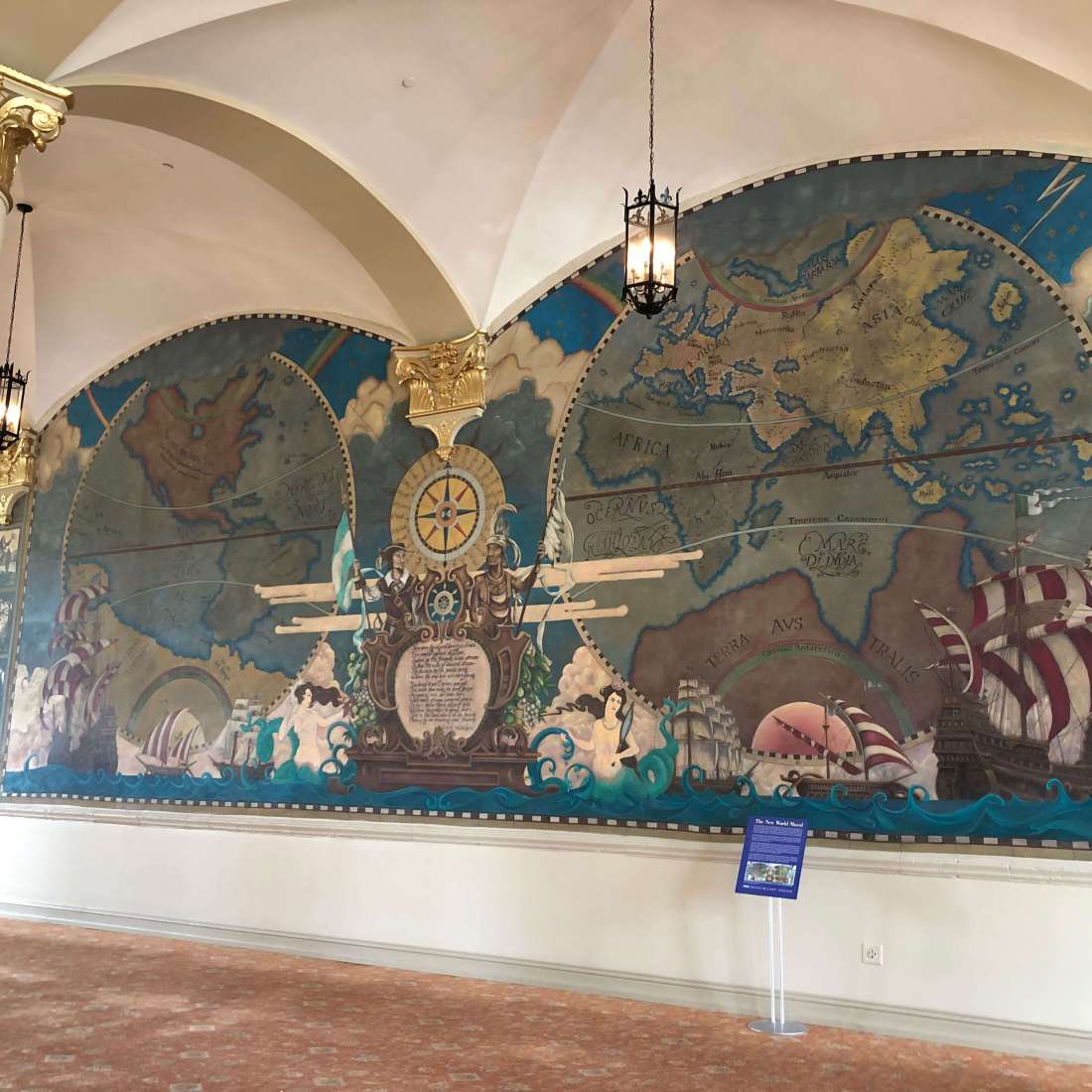
The New World Mural - The Freedom Tower, Miami
The New World Mural – The Freedom Tower, Miami

The building’s design included the original but painters had to recreate it in 1988 to protect it from ruin.

Kislak Center

This one showcased hundreds of artefacts and tools used by early settlers of Miami, including cultural representations from ancient civilisations, as well as paintings and statues of olden traditions like games, meditation behaviours, and social gatherings. Original copies of history books and writing samples, and even copies of Robinson Crusoe and Treasure Island.

By the People

By the People - An exhibition at The Freedom Tower, Miami
By the People – An exhibition at The Freedom Tower, Miami

This is an entire floor dedicated to social and technological advancements in the US. It was perhaps the most interesting and surprising part of my visit to The Freedom Tower. It showcases social developmental proposals from individuals and organisations. Some of them were just plans but some were in production.

Examples include, an urban housing plan for California, an upgraded city plan for Detroit, eco-friendly gear and cycles for farmers, waste management systems, abortion awareness campaigns, hydrology development plans for LA, and even a proposal to revamp windows in prisons to improve inmates’ morality.

These stunning proposals made me wonder how much the world is changing and how less we’re aware of it. New home designs, architecture plans, systems for police personnel protection, smart vehicles, all of which were a glimpse of our potential and the possible future. Humans are incredible, and the mind’s capabilities transcend the impossible.

If only we put that to good use, we’ll leave the world a far better place than we found it. Perhaps humanity isn’t lost after all. If only -

Ferrying across

“Well, you can’t miss state-n island!”

“The what now?”

That’s how I reacted when my colleague suggested the adventure. I had no idea what that was. As he repeated it, I frowned trying to remember. The more I thought about it, the more it felt like I’d heard the word somewhere. Where, however, I couldn’t figure out. And then it hit me.

“Oh! Isn’t it the stat-en island?”

I didn’t know a thing about it, but word sounded familiar.

I think he insisted it was the state-n island, and I didn’t persist. After all, he should know - he’d lived in Boston for five years travelling back and forth New York City. Besides, he was the one who suggested my Wall Street experience.

But that was the end of our conversation.

Whitehall Ferry Terminal, Manhattan, New York

We were in New York City for three and a half days, for two of which we’d be working all day. Although I didn’t discount the ferry ride, I didn’t expect to make it either. I’ve never been much of a tourist, and if the ferry was such a favourite activity, I figured it’d be swarming with crowds and selfie sticks.

However, when I found myself toying with free time on my last evening in NYC, I decided to give it a shot. After all, I’d enjoyed Wall Street despite it being a tourist magnet. Perhaps the ferry wouldn’t be so bad. And it was free.

Walking out of a famous bakery in Manhattan, I headed for the bus that’d take me to the Whitehall Ferry Terminal. Shuffling this way and that on the street, asking for directions and still losing precious daylight, I determined to walk the distance instead. Awaiting the bus would’ve delayed me further, and besides, it wasn’t too far.

Nevertheless, when I reached the terminal, the doors had closed, and the ferry had just left the docks. The next one wasn’t for another half hour. Heaving a sigh, I looked at the large clock inside the terminal. It was 7 pm. Banking on luck, I could make it back to my hotel near Times Square by 10 pm. Satisfied with that prospect, I turned to the scene around me.

The white walls and the white floor tiles reminded me of hospitals. A handful of staff mopped the floors, while anxious New Yorkers queued up behind the great gates waiting to board the ferry as soon as it arrived. The more relaxed folk sat on the waiting chairs, deep in discussion, sharing a meal, or downing a beer. Little stores lined the walls selling food, beverages, and magazines.

There were hundreds of people, buzzing hum of conversation, and yet so few tourists.

I hadn’t expected that. Everywhere I looked, I saw ordinary people-in men wearing comfortable pants and shirts, women in long everyday gowns, college goers with backpacks, and office workers with laptops. Why the party that sat next to me were employees at the terminal! They discussed shift timings and how one of their colleagues who worked overtime and still didn’t get enough pay.

As I sat there, unpacking my cinnamon roll and washing it down with coffee, I realised that I was amidst the true locals.

It wasn’t as I’d imagined, because there were no silly tourists, pouting lips, the pointing of fingers, or feverish chatting in a foreign tongue.

And I savoured every moment I sat there-my vegan cinnamon roll as well as the atmosphere.

Then a horn blared. The ferry was ready for us. As the doors opened, we streamed into the ferry. There I was, an outsider feeling like I belonged there, taking each step with purpose as if it were the most natural thing for me to do.

Heading to the upper deck (there was another one above me), I found a great spot to stand. I held the railings, waiting to hit the waters. Soon another horn blared, and the captain’s voice echoed through the ferry: “Thank you for riding the Staten Island Ferry.”

A few more horns and we were off.

The next twenty minutes, I’d say, was the best I’d spent in New York City. Thanks to Daylight Savings, the sun had just begun to set, and I happened to have a pretty steady hand while the video on my camera ran.

By the time we docked at the St. George Ferry Terminal in Staten Island, the sun had set, and I’d seen one of the best of it I’d ever see.

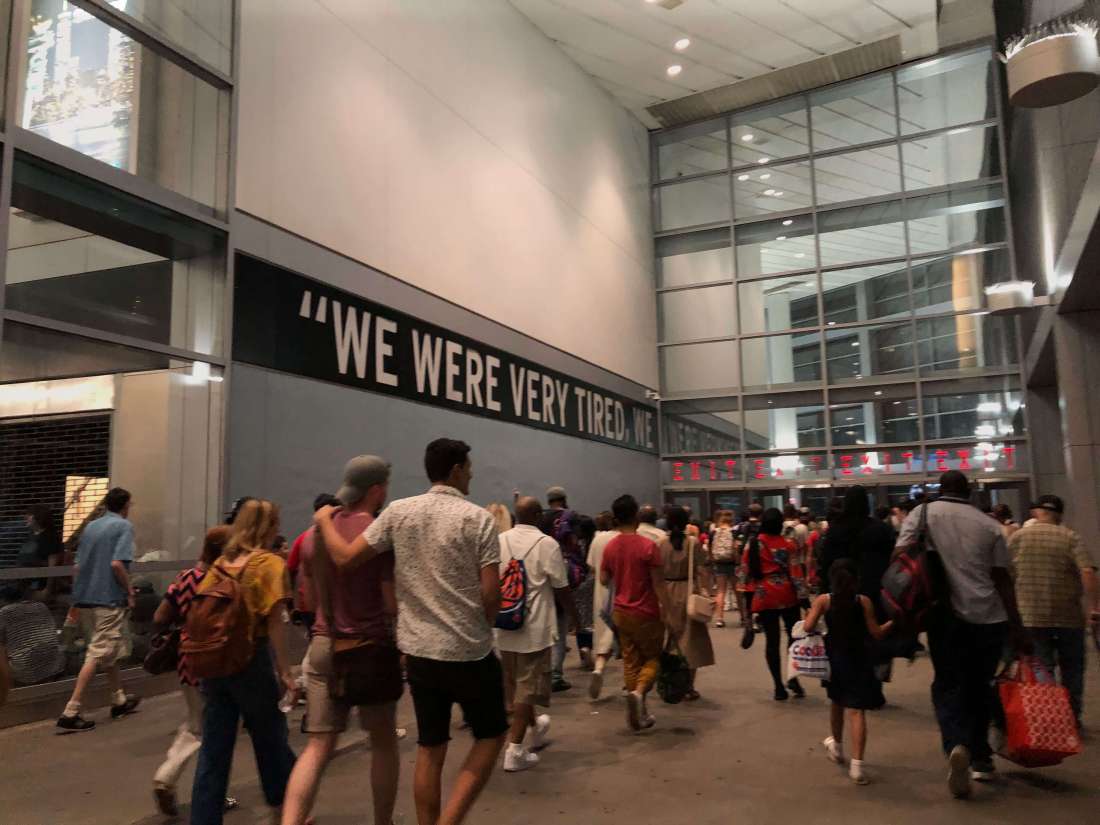
The ferry back to Manhattan was due in another half hour. But it took me about 10 minutes to get down from the ferry on to the terminal. I stayed inside the terminal, walking around reading the signboards, strolling through the souvenir shops, and trying to make out the massive map on the floor - of the islands in the Lower Bay area, around Staten Island.
And when it was time, I did it all over again. This time, however, instead of the sunset, I saw the infamous New York City skyline illuminated by millions of lights and lives that call it home.

It was an evening that lingered in my mind throughout the subway ride back and still does to this day.

Whitehall Ferry Terminal, Manhattan, New York
“We were very tired, we were very merry — we had gone back and forth.”

Find out more about the ferry: https://www.siferry.com/

Wall Street journal

Wall Street, New York City

One of the most disappointing aspects of travelling for work is that despite being in a new city, a new country, you still spend the entire day inside a closed air-conditioned room. It makes no difference whatsoever whether you’re at an exotic tourist spot, your hometown, or the Big Apple.

And so it was for me at the Big Apple. I’d already strolled through the heart of the city, stopping at the Grand Central, but I still had so much more to see. And so, taking the subway after work one day, at about 6 pm, my colleague and I arrived at the industrial part of the city—Wall Street.

What did we expect? Fancy suit-sporters strutting about, proud of a day of good business. After all, that’s how it was in the movies. Home of the NY Stock Exchange, the Federal Hall, and The Charging Bull, Wall Street over-promised glory. And as one of my colleagues pointed out, no matter how much you hate being touristy, you can’t leave New York City without seeing those iconic sights—petty though they are.

I’m glad I heeded his advice. Even though business had died down by the time we reached Wall Street, we walked down the street, stared at the buildings, and made valiant attempts to capture them all on camera.

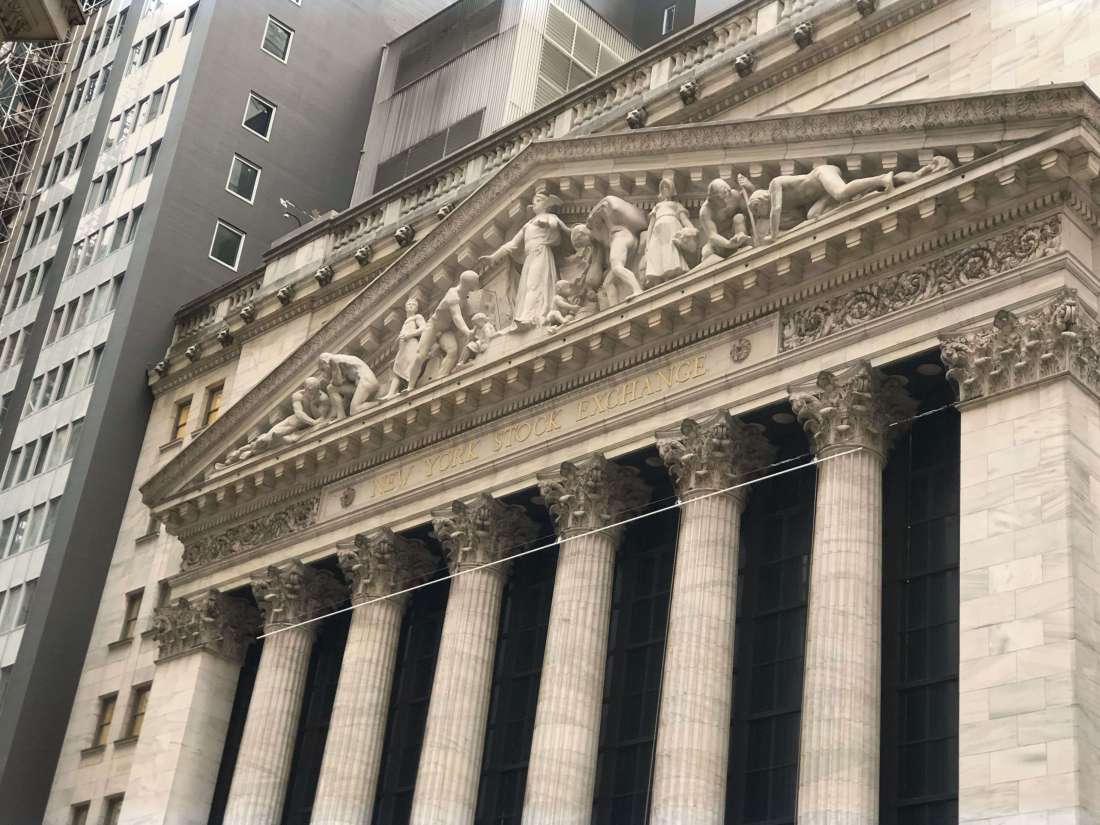
The New York Stock Exchange

New York Stock Exchange

Thanking Daylight Savings Time for the lingering light, we approached the looming Stock Exchange building, my eyes popping at the minute architectural details. Construction was in progress all along the street as well as on one side of the building as well. Noticing a sign that directed people to the entrance further down the road, we followed the path to encounter only closed doors and shut windows. A security guard stood by behind a mahogany desk and, cautious of crossing the work-in-progress lines, I approached him.

“Are visitors allowed inside?”

“No.” A good-natured man, he shook his head smiling.

Perhaps it’s because we’re late, the voice in my head echoed.

“Are visitors ever allowed inside?”

His smile reached his eyes. “No, I’m sorry.”

Oh, well. That was new. For all the popularity of the stock exchange, commoners will never know how it looks on the inside. We’ll have to make do with all that DiCaprio showed us.

Walking further down the road, we realised we were so close to another famous spot. Not one that I was curious or interested in at all, but we were just a few steps away. Would’ve been a shame not to stop by. And so we did.

The Charging Bull

The Charging Bull, New York City

I never understood what all the hoopla was about. Sure, it’s a magnificent beast, and yes, the sculpture is beautiful. And, of course, the defiant girl has always been an inspiration, more so in recent times. But beyond that, I wasn’t sure what brought the monument such significance. I waited a while to try and capture the Bull alone, but he was busy entertaining visitors who wanted to pose with him. People queued up for a photograph and, try though I did, I couldn’t get a proper portrait of the bull.

Shrugging—it wasn’t a big deal anyway—I returned to the map. The World Trade Centre and the 9/11 memorial seemed minutes away.

World Trade Centre

In hindsight, it seems silly to admit, but as I walked towards the World Trade Centre building, I realised I never knew what it was. All I had ever heard of it was its massive grandeur. And so when we came upon the building, I was awe-struck at how huge and welcome it was. For the second time that day, I tried, failing again to capture its entirety in one photograph. Regardless, though, relentless, I kept clicking until my colleague reminded me we should go inside. When we did, my eyes first set on the ceiling and the spine-like architecture. It’d looked like a bird’s wings from the outside, and here I stood looking at the spine that held both wings together. Calling it beautiful would be an in injustice. However, as I stood there pondering my next move, I realised I was in a shopping mall. Sure, the name is so popular that the entire world wants to be there, but when I did, although it mesmerised me, the place didn’t feel newer than the Magnificent Mile in Chicago, or Hollywood Blvd. in Los Angeles.

9/11 Memorial and Museum

The last thing on our list of the Wall Street journal was the most important one. Walking towards the massive hollow hole in the ground where the twin towers once stood, I couldn’t help but reminisce the behemoth that terrorism has been in our lives. Of course, it’s not a sad, empty hole now—it’s instead a memorial fountain with names of all the victims carved in stone. It’s a glorious tribute to the dead, and yet a wrenching reminder of the horrors of the past.

With that moment of reflection, we turned away. It was time to go back to the hotel. It was a work trip, after all, and we had work to do.

P.S: Click images for full resolution.

Go

Carry me onwards

places where the soul is home

away from houses

Stopping at the Grand Central Terminal

You have to understand that when someone says Grand Central Terminal, not everyone thinks of a train station. That’s how it was for me when I read about it online. Weeks before my trip to the US, I scoured the internet for things to do in New York City. We had three and a half days and a lifetime’s worth of experiences to expect.

And so it was on a travel website that I came across this must-see place. Upon reading a review, it dawned on me that terminal referred to the train station, but I still was nowhere close to prepared as I entered the station.

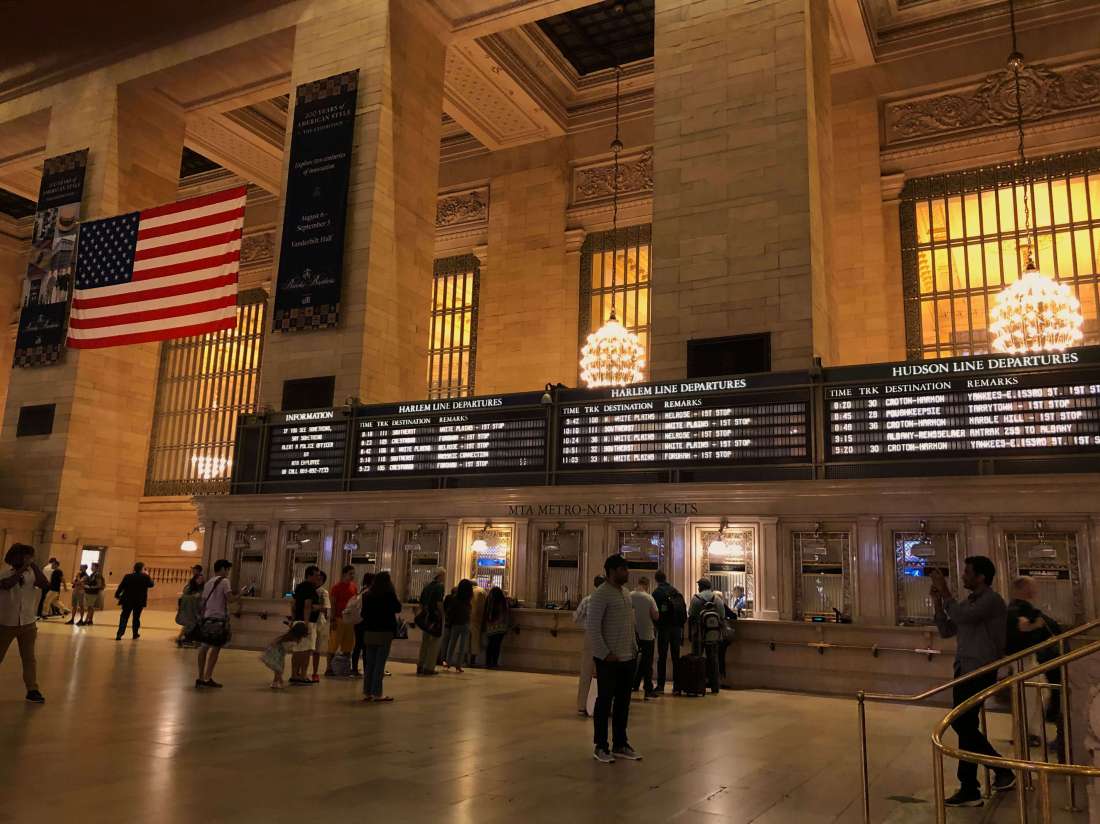
Grand Central Terminal display boards

My friend and I walked a long path, scanning the map to identify the exact entry point. And when we, at last, figured it out, we rode down the escalator to the actual lobby of the station.

In hindsight, that moment of my life was like a movie. My jaw dropped on its own accord, and my eyes grew wider than in a long time. For someone who’s accustomed to dingy stations overflowing with weary travellers who clutch five or six carry-on bags, wailing children, the stench of uncleaned coaches, the whiff of engine smoke, and months worth of grease on every wall and railing, the central terminal was a make of pure gold.

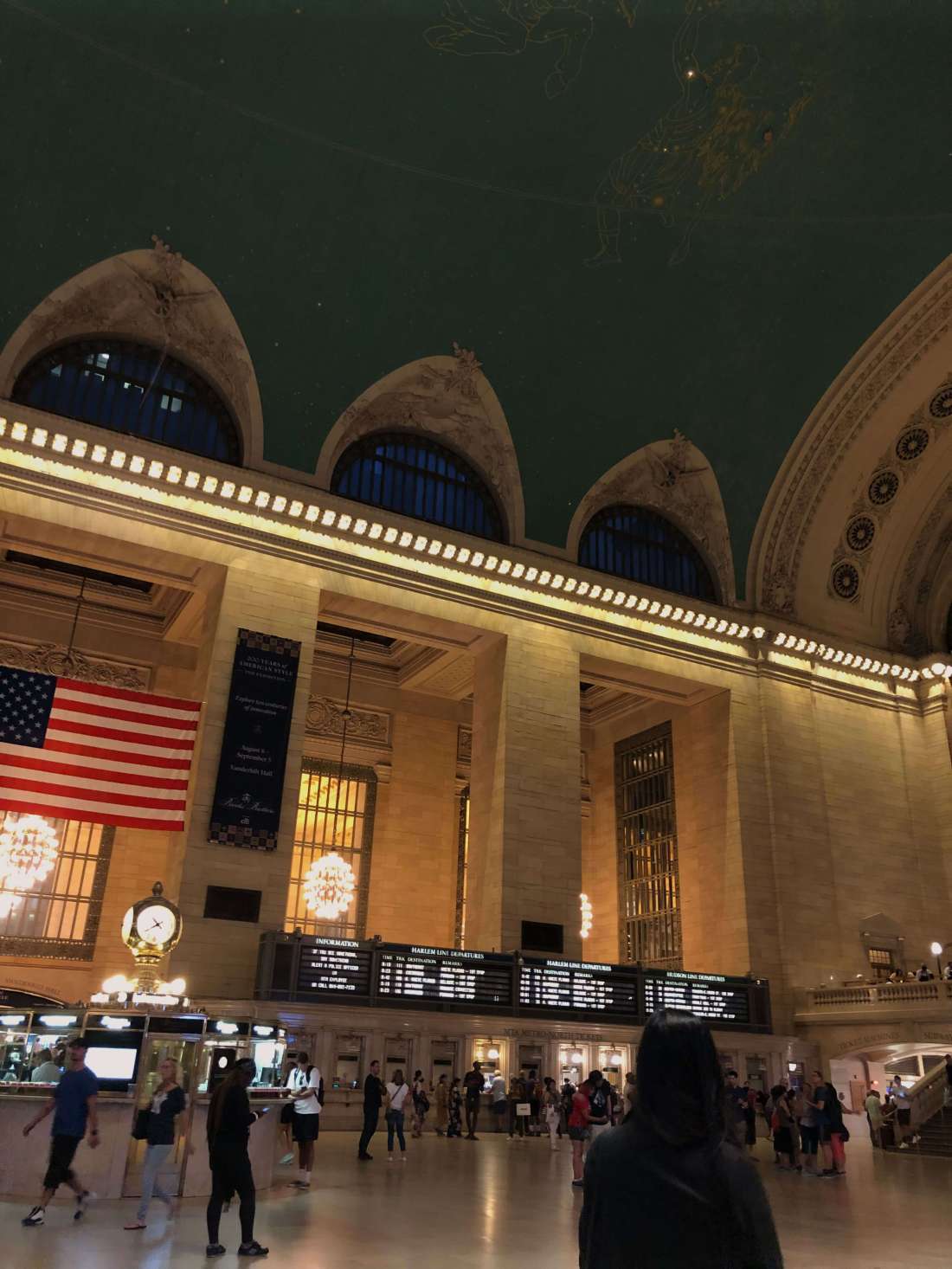
It’s funny, but the station walls were mustard, glowing in gold because of the thousands of lights that lined every inch. People flocked, of course. But nothing else seemed even to remind me of the train stations back home. Arches to my left and right led to tracks on both sides. A stairwell on either side made up a path that went around the centre of the terminal. And right in the middle, facing me was a grand gold board displaying departure and arrival times.

Blinking in slow motion, I tilted my head upwards gawking. There, stretched out across the entire ceiling was a mural—a gorgeous work of art—illustrating the night sky, the stars, the moons and, the zodiac signs. Orion seemed to wave at me, and the majestic Scorpio slithered in a corner. I spotted Cancer and Leo and the good old Libra weighing, analysing every situation.

My mind felt amused. My heart elevated. And my body transfixed. It was grander even than the setup palaces in movies. And trust me, Tamil (my mother tongue) movies have a lot of castles.

I couldn’t imagine the genius that went into building such intricate works of beauty into a train station. Its purpose was the same as any other train station in the world: helping people find their trains. But this station went way beyond: there was a massive food court in the lower levels featuring the best of culinary experiences like fresh gourmet bakeries, Shake Shack, and the Oyster Bar. And as if that weren’t enough, there were over 40 retail shops within the station, including the likes of Starbucks, Apple, and various other chain stores.

It’s no wonder that Wikipedia claims that in 2013, over 21 million tourists visited the station—not to board trains but to experience architectural marvel and elegant interior designing. And of course, the Grand Central Terminal is a US National Historic Landmark.

While I was busy wrapping my head around the many glittering things about the station, most people around didn’t care as much. New Yorkers. They were more worried about missing their trains or losing their seats. Alas, I realised, perhaps the Grand Central isn’t as exciting when you’ve been there a hundred times.

Grand Central Terminal, New York City

Tourists, on the other hand, seemed satisfied with posing for a few photographs against the glowing granite walls, or with the shiny display board in the backdrop. It’s a memory worth keeping and cherishing. Would they spend another evening of their vacation at the same place, I wondered doubtful.

In my case though, there’s every chance I missed many little noteworthy things at the station. And I’m sure that if I go back, it’ll still seem different, new, and impressive as the first time.

Perhaps that’s the difference between a tourist and me—it’s not about where I went or stood, but about the significance of the place and the spine-tingling sensation afterwards. It’s not about selfies or Instagram Stories, but rather more about the muse it leaves me with and the undeniable yearning for more.