Discovery

I hate mobs. They make me nervous. Even as I think about it, my heart bangs in its cage and my legs start to tremble threatening to give way at any moment. And speaking in front of a gathering is awful. Give me a mike and put me under the spotlight, and I’ll be reduced to a slump.

Or, at least, that’s what I thought it would be like.

In school and at work, I’ve had to explain something to a bunch of people. But every time that happens, I freak out so much that my speech loses all sense. And that’s why I was beyond “just nerves” when I heard I’d have to conduct a session in a workshop at my job.
To complicate things, I already knew a bit about my audience: they were all stay-at-home married women. Some had kids, some had more time. Most of them were single- or double-degree holders on a break after marriage. And all of them were at least 10 years older than I. Talk about intimidation.

I needed several deep breaths. And a few gulps — of air.

How would I explain something to them without coming off as a young and insufferable know-it-all? I had so many doubts; people hated contradictions, and a school kid telling older women what to do, isn’t most people’s idea of an ideal workshop. They would’ve expected somone much older-looking, taller, and experienced to conduct an educational workshop.

And yet, when I stood in front of the audience, the glare from the projector almost blinding me, the uncertainty disappeared from my mind. All of a sudden, I was looking at a bunch of people eager to learn; they didn’t care that my head, while I stood, was at their eye while they sat.

Clutching the mike, I, for the first time, felt confident facing a crowd. I was calm. My legs were steady, my heartbeat didn’t sound like a siren, and my pulse wasn’t racing. I began, and I felt myself smiling. I realised how easy it felt. It felt natural talking to these women who wanted to learn and to listen. And then, out of nowhere, I discovered I had matured so much from the shy and cowering schoolgirl I was until a few years ago.

I had grown up at last. And for once, all was well.

When Amazon Pissed Me Off

It’s amazing how much we, as consumers, rely on brand names. I don’t often buy stuff online, and when I do, however, I always choose Amazon. Whether it’s books, clothes, or something bigger like electronic goods, Amazon is my go-to place online.

I have specific reasons, and they’re simple, too. Amazon is the most popular ecommerce site and it’s ubiquitous. Obvious conclusion: you don’t get to do business on such a large scale if you’re not good.

But as it is with consumer behaviour, it’s weird how a tiny glitch could break even a giant as gigantic as Amazon. A couple of weeks ago, I ordered a memory card on Amazon India and was promised delivery about 12-14 days from the date of purchase. It was a long wait, but I didn’t think much about it then because I was positive the estimate date was just an estimate; most orders arrive much before the delivery date. Besides, the day after I placed my order, I got a message saying my order was shipped. Ha, I thought, Amazon is Amazon for a reason, and I had no reason to worry.

Wrong.

After the prompt first message, I got nothing else. The estimated date whizzed by without me receiving my order. I tried tracking my package only to find out that the shipping details on my Amazon account were false. I dug up some trash on the seller, realising that almost all customers of that seller hadn’t received their orders. I tried contacting the seller (twice) and received no response as response.

I grew annoyed. Deciding to give up on Amazon, I ordered from another website, and got my package within two days.

Now I know Amazon has limited control over the sellers on their website, but I still flare up at Amazon. It’s natural human instinct. As a customer, I don’t care what’s going on with the company and a seller they’re hosting, but if you piss me off, I’m ditching your business.

Maybe I judge Amazon too harsh. But again, customers want what they want, and if a business fails so bad, customers won’t be compassionate. I work for an IT company and I understand that I shouldn’t blame it all on Amazon because of one seller’s mishap. But hereafter even before I type Amazon in my browser, I’ll think twice. My impression of the brand is tarnished forever. And that’s a price Amazon has to pay.

Support Unsupportive

If you’ve been on the internet at all, you’ll know too well how hard it is to figure some apps out. We’re always using these apps — blogging tools, photo editors, text editors, proofreaders, budget managers, ebook readers, reminders (my saviour) — you get the point. These aren’t luxury apps either, they’re necessities. That’s why it’s important that these apps are proper. For the most part, my apps are great. They’re pretty straightforward so I don’t have to toil much. Not all products are like that, though. Some products work fine until they don’t anymore. When that happens, I panic.

Because when something isn’t working as it should, I have no choice but to call customer support. I can’t stand the idea of asking for help. Not because I’m an egotistical bastard, but because customer support isn’t supportive at all. You almost never get the feeling that the person sitting on the other side is, in fact, a person. They’re more like robots with western names.

Whenever I write to the customer support team of a product, I get an automated reply. Which is alright, because that’s how they acknowledge mail. But then they reply to my message with another message that makes me wish they hadn’t bothered at all. It’s incredible how support teams treat customers. They scatter words that make no sense and punctuation that makes everything worse. Some emails echo satire — without intention. “Welcome to the world’s best support team,” they say when they’re far from helpful, and not even close to good. Sure, I can tolerate the waiting time, but I can’t tolerate inhuman response.

“Sorry for your troubles. Any inconvenience is regretted.” That’s the most passive aggressive statement anyone can say to another person, let alone someone asking for help. Of course, the inconvenience is regretted, but what are you doing about it, apart from declaring said nonexistent regret?

I can understand, though. Supporting is tough. It’s exhausting to answer the same questions to a bunch of people who refuse to understand. It’s tough playing the educator to people who’re determined to act stupid. It’s stressful to deal with angry customers across the globe — when more than half of them don’t even speak your language.

Nevertheless, at the end of the day, the customer is king — or queen. And that’s why patience is a virtue. That’s why humaneness is a value. In this age when people tweet hate-words to get the attention of a company, it’s just too easy to bring corporations down.

But it’s not about bringing corporations down with the “power of the people.” It’s just plain hurtful to open my inbox and look at a reply that says, “Your patience is appreciated,” when I know that’s not true. I’d rather decode the product for myself, even if I have to read an unhelpful help document. And when it goes beyond me, it’s easier still to give up altogether. Besides, if one product fails, there are a hundred alternatives online.

Ever had trouble with customer support? Sure you have. What did you do?

The Itch I Can’t Get Rid Of

itch

For a while now, Gmail has been showing me advertisements in my Social, Promotions, and Updates tabs. And though I’ve been dismissing them at will, I can’t help but freak out when I see something so relevant to what I had been searching a while ago.

I know, Google reading my emails and following my browsing history isn’t a new concept. Google has always done that, and despite a lot of people’s outburst against it, it doesn’t seem like big G would stop anytime soon. On another note, part of my work involves writing ads for Google to show our customers when they search for something relevant. So I don’t even think I have the right to be outraged by the ads.

Still, I am.

I don’t like the fact that Google is messing with my search history. It’s messing with my head. I don’t browse for anything vile but I get cautious even when my boss stands behind me. And to think Google is just right there, inside my system, peeking at me, and pecking at every trail I leave is just a little too much to take.

Then there’s the “Tell us why you dismissed the ad” message. That’s got to be the most sarcastic message that Google can send its users. I mean, what do you expect, Google? I dismiss the ads because they’re masquerading as emails while obscuring my actual emails. Not to mention it’s rude to shove ads in the face of someone who’s logging in first thing in the morning.

As if these weren’t enough, there are people out there who don’t care about Google’s meddling. I met a woman who shrugged off the idea as if she couldn’t care less. She was happy, instead, that Google had found her the curling iron she had tried and failed to find online.

Emails, like letters, are personal — even if I’m just writing to a software support team. I don’t appreciate it when a G product lures me into relying on its technology. The world already depends too much on Google. From my search and routes to documents and email, if I log into one app, a single company can see through me like glass.

To put it in plain speak, no matter where I go, big G follows me, watching me like a hawk. Why does it feel like 1984 again

People Don’t Know What They Want

people-dont-know-what-they-want-steve-jobs-quote

Sometimes in life, you just get used to the way certain things work. You take them for granted and, for some reason, you start believing that’s that’s the way things should work. Like personal laptops, for instance. I love Apple, but I couldn’t afford an Apple product until I started working. That’s when I got the office Mac. Despite its hefty price tag, the Mac was breezy. The near-unattainable beauty was darn easy to get used to. I fell for the Mac the moment I touched it and the cool metal sent electric excitement down my spine. It felt sleeker than the “tick-tock” of my previous Windows laptop.

The Mac was a class apart from every piece of technology I had seen before. It wasn’t just its cool exterior; I was in awe of everything that came with it, too. When I tried moving from one window to another for the first time, the Launchpad popped in out of nowhere. I was taken aback before noticing the search bar on top. It was like my Mac knew I was lost and needed to find my way through a mass of apps.

I love Finder’s eagerness to find anything on my system, from the smallest file I’d saved years ago to the last website I opened a while ago. And the first time I shut my Mac off, I spent a good couple of minutes trying to close the Finder, only to realise later — with such thrill — that you can never quit looking for answers.

Then came the shock of the inverted scroll. What was shocking, though, is how natural it felt to scroll against Windows. For too long I’d used Windows without noticing that the other way made more sense. I now I cherish Mac’s re-invented inverted scroll, not to mention the way a document bounces back when you’ve scrolled all the way. It’s the little things that matter the most, and it seemed like Apple had thought of them all.

And then there’s Safari, without a doubt, the best browser I’ve ever used. Not just in terms of beauty and slivers of silveriness, but also the way it sympathises with a user. I always go for full screen, and when I move my mouse pointer towards the top to switch to another tab, it works fine without affecting my experience. What wasn’t fine, though was when I did the same in a more “hip” browser. There, the system menu showed up, hiding my browser tabs for a while. I went back to Safari to check how it handles the situation and found out that it doesn’t hide the tab names in the browser. And that’s where Safari is better than every other browser I’ve used.

Here’s the thing, though, I wouldn’t have noticed the obvious flaw in the other browsers if I had continued to use only those. I would’ve adapted and believed that that hiding the tabs was the only way to handle the case.

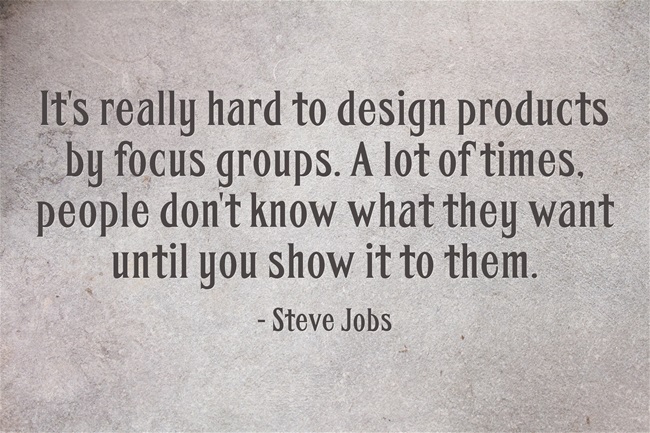
But the Mac showed me an alternative — a better version. We’re so used to adapting to what we already have, that only when something better like the Mac comes along do we realise we shouldn’t settle. Perhaps that’s why Steve Jobs was a visionary.